How to save money on diapers
Discover how to save money on diapers without switching brands or lowering quality. These proven strategies reduce diaper spending by up to 35 percent — starting today.
How to Save Money on Diapers Without Sacrificing Quality
Knowing how to save money on diapers is essential for any family, because diaper costs add up faster than almost any other baby expense. The average child uses between 5,000 and 8,000 diapers before completing toilet training. Consequently, disposable diapers cost a typical family $2,000 to $3,000 over the entire diapering period. However, several proven strategies reduce this cost by 20 to 35 percent — without changing the brand your baby needs or sacrificing quality. This guide covers every one of them in practical, actionable detail. Additionally, for the complete overview of diaper types and which options offer the best value for different budgets, read our complete reference ↑ , How to Choose Diapers: The Complete Guide [PILLAR LINK] first.
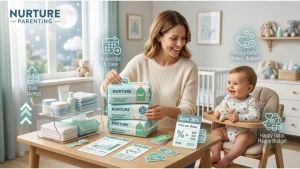
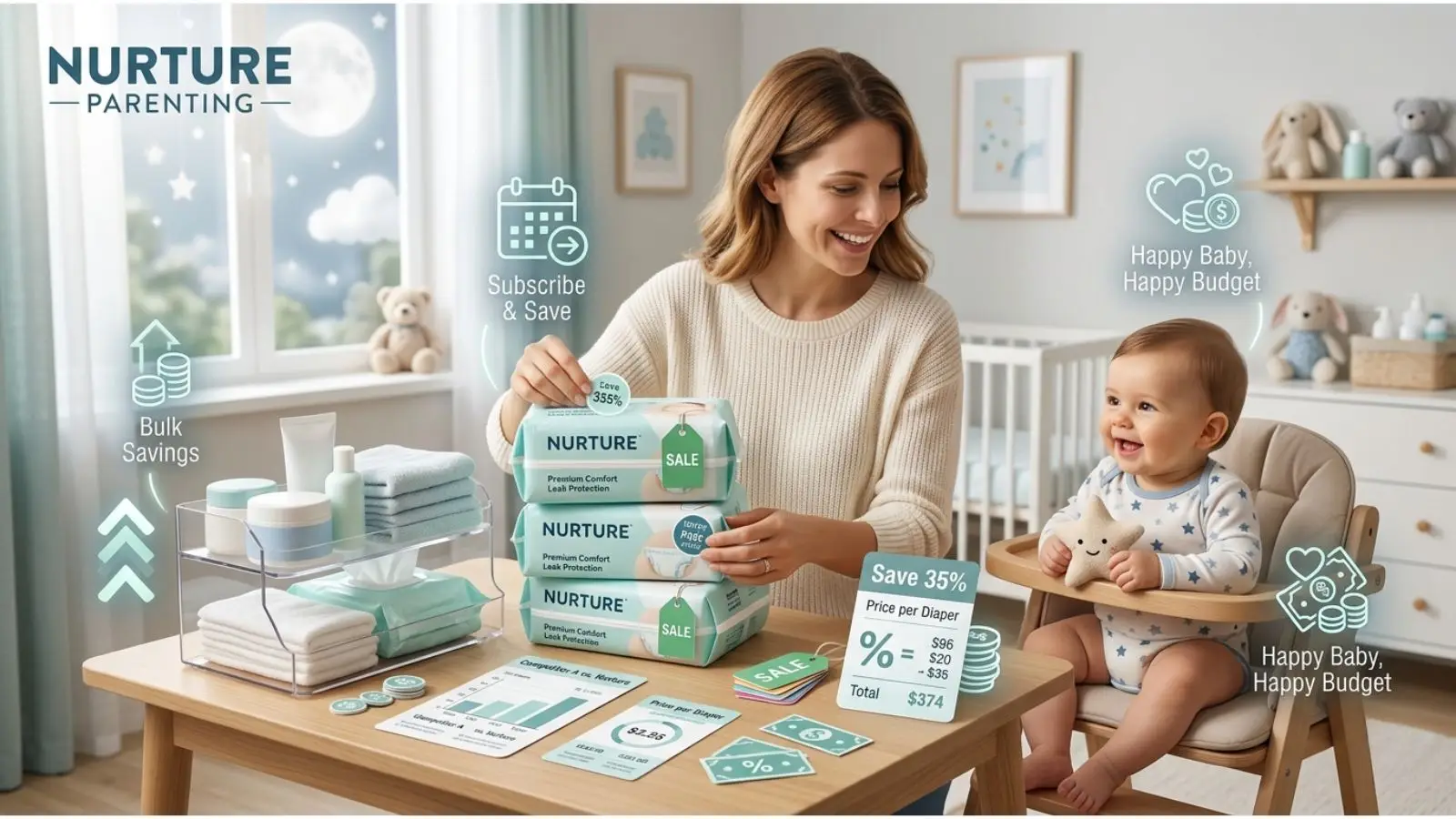
Alt text: how to save money on diapers — flat lay showing diaper packs of different sizes with price comparison tags illustrating bulk savings versus single-pack pricing
How to Save Money on Diapers: Buy in Bulk
Buying the largest available pack size is the fastest and easiest way to reduce your per-diaper cost. Most major diaper brands offer a price reduction of 15 to 25 percent per diaper when you buy the jumbo or mega pack compared to a standard small pack. The unit price is printed on the shelf label in most supermarkets. Therefore, always compare the per-diaper price — not the total pack price.
Which Pack Sizes Give the Best Per-Diaper Price
The best value is almost always found in the largest pack the retailer stocks. For most brands, this is the 150 to 200 count mega box. However, there is one important risk with bulk buying: babies grow fast. Consequently, never buy more than one or two bulk packs of the current size at a time. If your baby outgrows the size before you finish the pack, most major retailers and online stores will exchange unopened packs for the next size up without a restocking fee.
Additionally, warehouse club memberships such as Costco or Sam’s Club often offer the lowest per-diaper prices available anywhere. If you use diapers in high volume, the annual membership cost is typically recovered within the first two to three diaper purchases.
How to Save Money on Diapers: Use Subscribe and Save
Most major online retailers offer a subscription discount of 5 to 15 percent on auto-delivery orders for diapers. This discount stacks on top of the bulk pack savings, meaning you can combine both strategies simultaneously. As a result, a single purchase with a subscription discount on a bulk pack can yield savings of up to 30 percent compared to buying a small pack at full price in a physical store.
How to Set the Right Delivery Interval
The key to making a diaper subscription work is setting the delivery interval correctly. Set it to deliver too frequently, and you accumulate stock faster than you use it. Set it too infrequently, and you run out. Therefore, count how many diapers your baby uses per day, multiply by the pack count, and set the delivery interval to match.
Furthermore, most subscription services allow you to pause, skip, or cancel at any time without penalty. This flexibility means you can also swap to the next size up as soon as your baby outgrows the current one — without being locked in to the wrong size.
Stack Loyalty Points to Save Even More on Diapers
Major supermarket chains and pharmacy loyalty programmes typically offer points multipliers on baby products. In fact, many stores run targeted promotions specifically for diaper buyers — offering double or triple points on selected brands during promotional periods.
Combining Points with Sale Prices and Subscriptions
Experienced parents call this approach diaper stacking — combining a sale price, a loyalty points multiplier, and a subscription discount on the same purchase. Each layer of saving is individually modest. However, when stacked together, they can reduce the effective cost of a diaper pack by 35 to 40 percent compared to a full-price single-pack purchase.
To maximise this approach, set a price alert on your preferred brand through a price tracking app or browser extension. When the price drops to a target level, activate your subscription, use your loyalty points, and purchase the largest available pack size. As a result, you lock in the lowest possible cost per diaper.
When Store-Brand Diapers Can Save You Money
Premium store-brand diapers from major supermarkets have improved significantly in recent years. In independent absorbency tests, several store-brand options now perform comparably to mid-range national brands at 30 to 40 percent less per diaper. Therefore, store brands are worth testing — especially for babies with normal or healthy skin who are not prone to rashes.
How to Test a New Brand Before Buying in Bulk
Never buy a bulk pack of any new brand — including store brands — without testing a small pack first. Here is a reliable two-minute absorbency test you can do at home:
Pour a fixed amount of water into the diaper — about half a cup. Wait two minutes. Press a piece of white tissue paper firmly against the inner surface. A quality diaper will leave the tissue almost completely dry. A poor-quality diaper will transfer moisture back immediately. This is exactly what that diaper does against your baby’s skin over three hours.
If the test passes, the store brand is a safe choice for cost savings. If it fails, the per-diaper savings are not worth the rash risk. For the full comparison of which brands perform best for sensitive skin, see Best Diapers for Sensitive Skin [INTERNAL LINK C13].
How to Save Money on Diapers with Cloth Diapering
The most significant long-term savings available in diapering is cloth diapering. A full cloth diaper stash costs $200 to $300 upfront. However, it reduces total diapering costs over three years to approximately $300 to $500, compared to $2,000 to $3,000 for full disposable use. Furthermore, a cloth stash can be reused entirely for a second child at near-zero additional cost.
The Hybrid Approach — Cloth at Home, Disposable Outside
If a full cloth commitment feels like too much, the hybrid approach offers most of the savings with far less effort. Use cloth diapers at home during the day, where laundry is easy, and mess is manageable. Switch to disposables overnight and for outings — where convenience is essential. As a result, most hybrid families reduce their total diaper spending by 40 to 60 percent without the full laundry burden of an all-cloth routine.
For the complete cost and convenience breakdown between cloth and disposable diapering, see Cloth vs. Disposable Diapers: Full Comparison.
For the complete diapering reference covering all diaper types, brands, and skin safety, return to ↑ How to Choose Diapers: The Complete Guide [PILLAR LINK].
Diaper Money-Saving Tips: Frequently Asked Questions
Can I really save money on diapers without switching brands?
Yes, absolutely. Bulk buying, subscription discounts, and loyalty point stacking can reduce spending by 25 to 35 percent on the same brand you currently use. The savings come from purchasing strategy, not product switching.
What is the cheapest diaper that still performs well?
In independent tests, Kirkland Signature (Costco) and Aldi Mamia consistently outperform their price point significantly. Both are comparable to mid-range national brands in absorbency and softness. However, always test a small pack before committing to bulk quantities, as performance varies by baby size and skin type.
Is it cheaper to buy diapers online or in a physical store?
Online is almost always cheaper, particularly when using subscription discounts and bulk pack sizes. Physical stores, however, offer the advantage of exchange policies on unopened packs when your baby outgrows a size. Therefore, for the best overall strategy, buy in bulk online with a subscription, but keep your physical store receipts for size exchange purposes.
How much should I budget per month for diapers?
For a newborn using disposables full-time, budget $60 to $100 per month in the first three months. This gradually reduces as your baby grows and changes less frequently. By 12 months, most parents spend $40 to $70 per month. Additionally, using even a partial cloth diapering routine reduces these monthly costs significantly.
For the complete parent reference covering all diaper types, brands, skin types, and sizing, return to ↑ How to Choose Diapers: The Complete Guide [PILLAR LINK].