When to start potty training
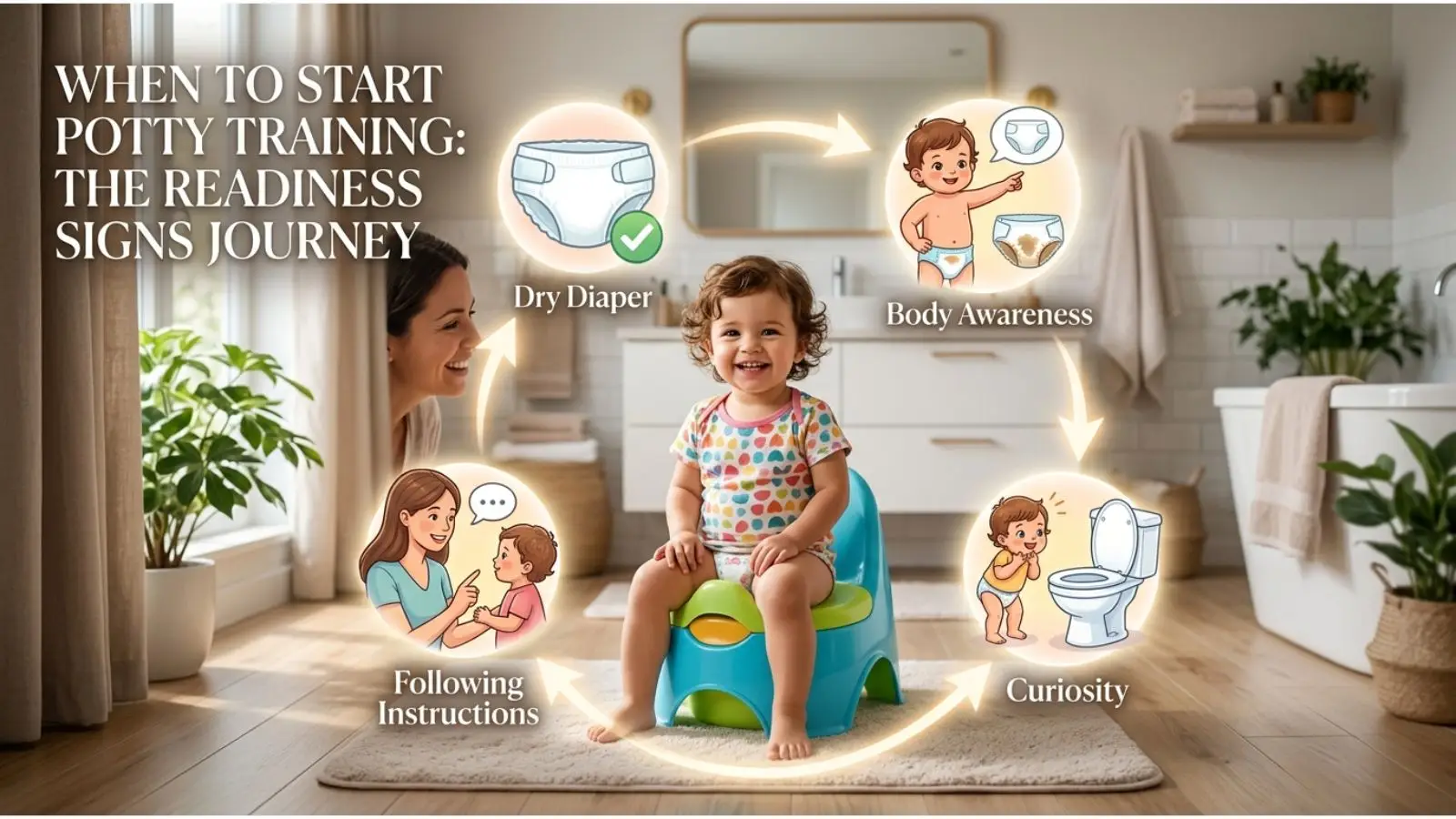
Not sure when to start potty training? Learn the exact readiness signs to look for and follow this proven step-by-step plan to make the transition smooth and stress-free.
When to Start Potty Training: A Stress-Free Step-by-Step Plan
Knowing when to start potty training is one of the most common questions parents ask — and one of the most misunderstood. Many parents try to begin too early, based on age alone. However, age is not the right indicator. In fact, readiness is entirely about your child’s behaviour, not their birthday. Starting potty training before your child is developmentally ready leads to setbacks, stress, and a much longer process for everyone. Therefore, this guide shows you exactly which signs to look for and how to execute a step-by-step plan that actually works. For the complete overview of all diaper types and the full diapering journey, read our complete reference ↑ , How to Choose Diapers: The Complete Guide [PILLAR LINK] first.

Alt text: when to start potty training — toddler sitting on a colourful potty chair smiling in a bright, cheerful bathroom setting
When to Start Potty Training: The 4 Key Readiness Signs
The biggest mistake parents make is choosing a start date based on a calendar, a book, or what another parent did. However, your child’s body and behaviour are the only reliable indicators. Here are the four signs that confirm genuine readiness — not just occasional success.
Sign 1 — Staying Dry for Extended Periods
Your child wakes dry from their afternoon nap. Their diaper stays completely dry for two or more hours during active daytime play. This shows that the bladder has developed enough voluntary muscle control to hold urine. Without this physical development, no amount of training or reward charts will work consistently.
[H3] Sign 2 — Showing Discomfort with a Dirty Diaper
Your toddler pulls at a wet diaper, hides in a corner to have a bowel movement, or tells you they have made a mess. This body awareness is a critical developmental signal. It shows that your child can feel the difference between wet and dry — the foundation of successful toilet training.
Sign 3 — Bathroom Curiosity and Imitation
Your child follows you to the toilet, watches what you do, asks questions, or announces that they need to go before the event occurs. Imitation is one of the strongest learning mechanisms in toddler development. Consequently, a child who is curious about the toilet is already motivated to use it.
Sign 4 — Ability to Follow Simple Instructions
Potty training requires your child to understand and respond to short, clear directions. If your toddler can reliably follow two-step instructions in other areas of daily life, they are cognitively ready for toilet training. This is often the last readiness sign to appear, and it is frequently overlooked.
For context on pull-up training pants that support this transition, see Best Pull-Up Pants for Toddlers [INTERNAL LINK C05].
Alt text: when to start potty training readiness signs — four-panel infographic showing dry periods, discomfort with dirty diapers, bathroom curiosity, and instruction-following ability
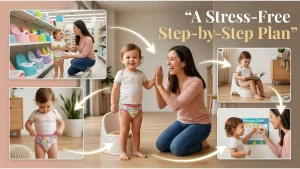
How to Start Potty Training: The Step-by-Step Plan
Once your child shows at least three of the four readiness signs, it is time to begin. However, starting correctly is just as important as starting at the right time. Follow this four-step plan for the smoothest possible transition.
Step 1 — Buy the Gear Together with Your Toddler
Take your toddler shopping and let them choose their own potty chair or toilet seat reducer. Let them pick underwear featuring their favourite cartoon characters. This sense of ownership creates genuine excitement. As a result, your child feels like a participant in the process rather than a subject of it.
Step 2 — Introduce the Routine Without Pressure
For the first week, have your child sit on the potty fully clothed for a few minutes each morning and evening. There is no expectation to use it. The goal is simply to normalise the potty as part of the daily routine. Additionally, reading a short book or singing a song during this time creates a positive association.
Step 3 — Switch to Training Underwear During the Day
Replace daytime diapers with thick cotton training underwear. Unlike modern diapers, training underwear allows children to immediately feel the cold, wet sensation of an accident. This immediate feedback is the most powerful learning tool in potty training. Therefore, do not use highly absorbent training pants that keep the child feeling dry — they defeat the purpose entirely.
Step 4 — Celebrate Every Win and Ignore Every Accident
Use a simple sticker reward chart displayed in the bathroom. Apply a sticker every time your child attempts to use the potty — not only when they succeed. Celebrate attempts loudly and enthusiastically. In contrast, when accidents happen, clean up calmly and say nothing negative. Punishment or frustration about accidents is the single most common cause of potty training regression.
Common Mistakes That Delay Potty Training
Understanding when to start potty training also means knowing what not to do. These are the three mistakes that cause the most setbacks.
Starting Before the Readiness Signs Are Present: Beginning too early does not speed up the process — it extends it. A child who is not ready will resist, regress, and take significantly longer to train than a child who starts when genuinely ready.
Switching Back to Diapers During Training: Switching back and forth between diapers and underwear sends a confusing message. Once you remove the daytime diaper, keep it removed during waking hours. Accidents are part of the process. They are not a reason to revert.
Expecting Nighttime Dryness at the Same Time as Daytime: Nighttime bladder control develops separately from daytime control and usually takes much longer. Therefore, keep a nighttime diaper or training pant until your child consistently wakes up dry. For full guidance on nighttime diapering during this transition, see Nighttime Diapering Routine for Better Sleep [INTERNAL LINK C14].
For the complete diapering reference from newborn to potty training, return to ↑ How to Choose Diapers: The Complete Guide [PILLAR LINK].
When to Start Potty Training: Frequently Asked Questions
What is the ideal age to start potty training?
Most children show readiness between 18 and 24 months. However, some children are not fully ready until they are 3 years old. Both timelines are completely normal. Focus on the four readiness signs described above — not on the age on the calendar.
How long does potty training take after you start?
Daytime training typically takes 2 weeks to 3 months once the child is genuinely ready. Nighttime dryness takes considerably longer — often an additional 6 to 12 months after daytime training is complete. Both timelines vary widely from child to child.
Should I use pull-up pants or regular underwear during training?
Regular cotton training underwear is more effective for daytime training because it allows your child to feel wet immediately after an accident. Pull-up pants are useful for outings and overnight. For the top-rated pull-up options, see Best Pull-Up Pants for Toddlers [INTERNAL LINK C05].
What do I do if my child regresses after training was going well?
Regression is completely normal and does not mean failure. Common triggers include a new sibling, moving house, illness, or a change in routine. Respond with calm reassurance. Reduce any pressure around toilet use. Additionally, temporarily reintroduce a pull-up if needed without framing it as a step backward. For full guidance on transitioning away from diapers permanently.
For the complete parent reference covering all diaper types, brands, skin types, and sizing, return to ↑ How to Choose Diapers: The Complete Guide [PILLAR LINK].