Diaper Size Guide: When and How to Size Up
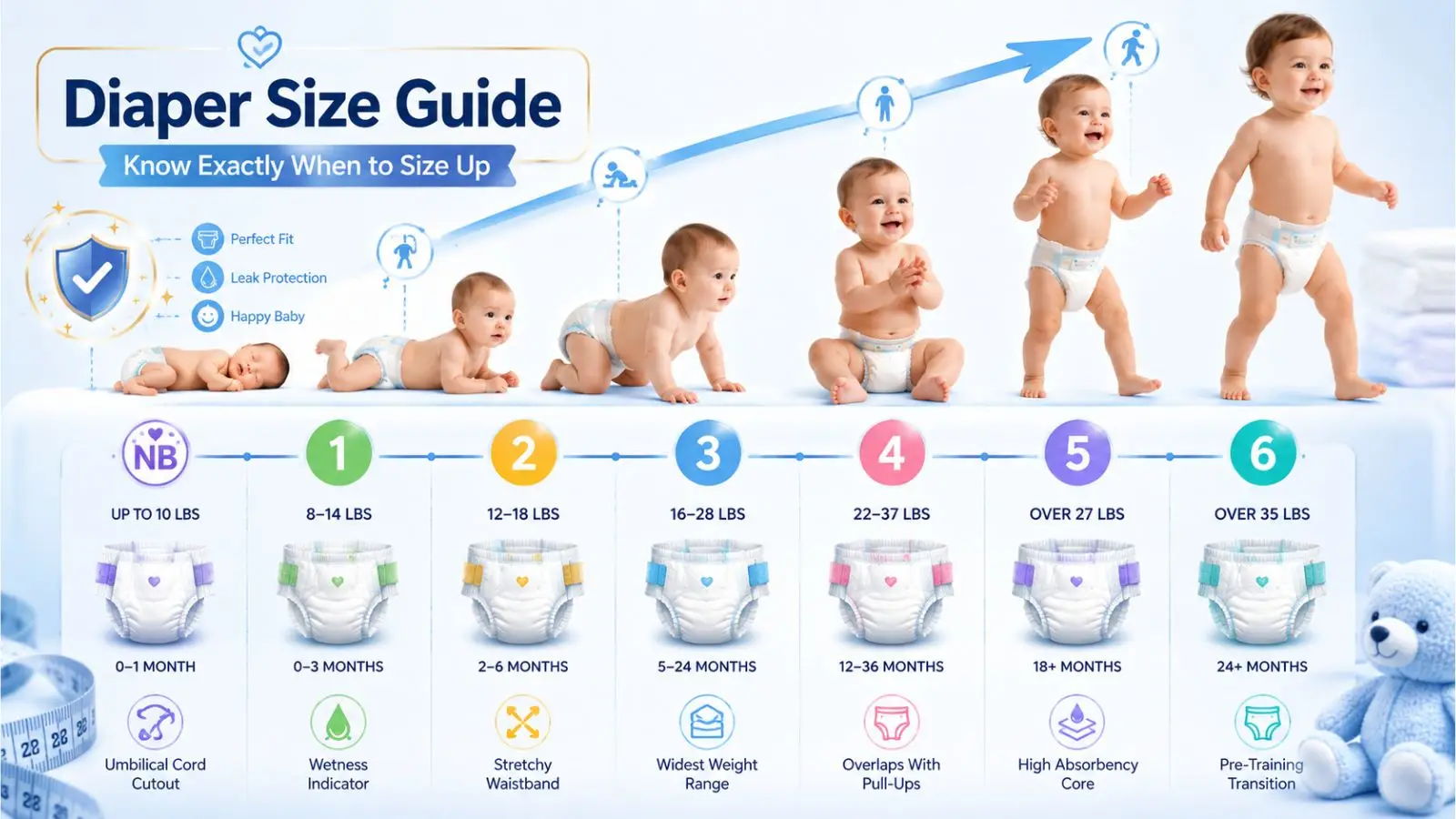
Diaper Size Guide: When and How to Size Up Without the Guesswork
Babies grow at a pace that constantly surprises new parents. One week, the diaper fits perfectly; the next week, there are red marks and daily leaks. The weight ranges printed on diaper boxes are a starting point only — body shape, thigh circumference, and torso length all affect the right size. For the full picture of how fit connects to skin health and leak prevention, start with ↑ How to Choose Diapers: The Complete Guide before working through this sizing guide.

The Standard Diaper Size Chart
| Size | Baby Weight | Typical Age | Key Feature |
|---|---|---|---|
| Newborn (NB) | Up to 10 lbs | Birth – 4 weeks | Umbilical cord cutout |
| Size 1 | 8 – 14 lbs | Birth – 3 months | Wetness indicator strip |
| Size 2 | 12 – 18 lbs | 2 – 6 months | Stretchy waistband |
| Size 3 | 16 – 28 lbs | 5 – 24 months | Widest weight range |
| Size 4 | 22 – 37 lbs | 12 – 36 months | Overlaps with pull-ups |
| Size 5 | Over 27 lbs | 18+ months | High absorbency core |
| Size 6 | Over 35 lbs | 24+ months | Pre-training transition |
Weight ranges are a guide, not a rule. Two babies of identical weight may need completely different sizes based on their body proportions. Always use the fit tests below — and when in doubt, always size up. As explained in ↑ How to Choose Diapers: The Complete Guide, a slightly larger diaper seldom causes problems, whereas a slightly smaller one often leads to daily leaks and painful skin marks. Diaper Size Guide.
4 Clear Signs It Is Time to Size Up
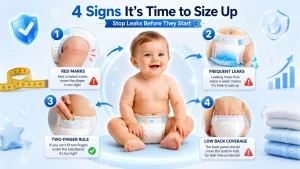
Once you have confirmed the right size, make sure your changing technique is maximising the fit. The leg ruffle check — described in detail in ↑ How to Choose Diapers: The Complete Guide — is the single most important post-fastening step for preventing leaks, regardless of the size you use.
Frequently Asked Questions
For the complete diapering reference — covering skin types, diaper categories, brands, and changing technique — return to ↑ How to Choose Diapers: The Complete Guide.