Cloth vs Disposable Diapers: Full Comparison
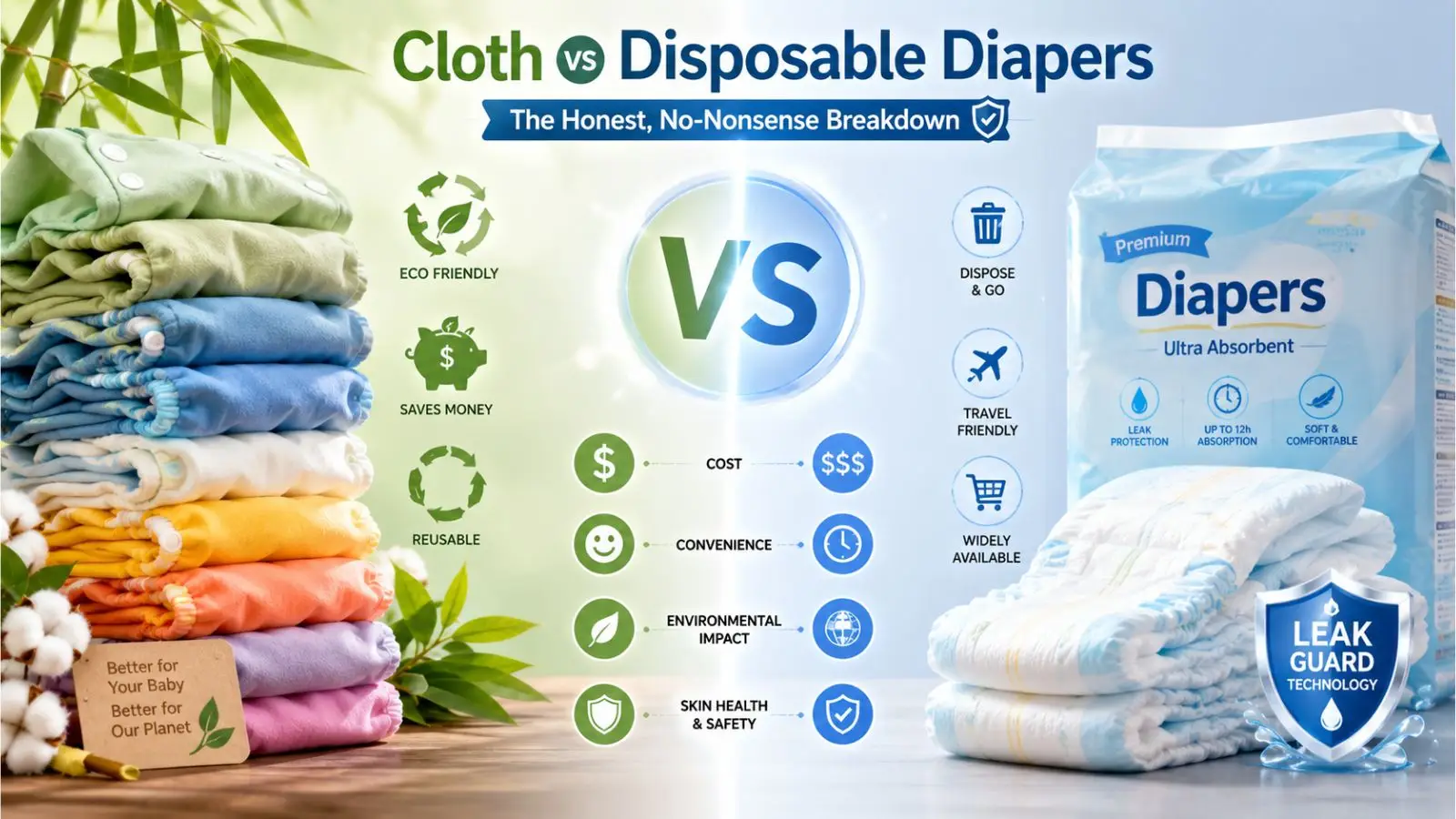
Cloth vs. Disposable Diapers: The Honest, No-Nonsense Breakdown
The cloth vs disposable debate is one every new parent faces. Both options keep babies clean and dry. However, they differ significantly in cost, convenience, and environmental impact. This guide gives you a clear, honest comparison so you can choose confidently. Additionally, it covers the smart hybrid approach that many families use to get the best of both. Before reading further, check ↑ How to Choose Diapers: The Complete Guide for the full context on diaper types and skin safety.
Cloth vs Disposable: The Real Cost Comparison
The upfront cost of cloth diapering is high. A full starter stash costs $200 to $300. Disposables, on the other hand, cost only $15 to $30 per pack. However, the long-term picture looks very different.
Disposable diapers cost a family $2,000 to $3,000 over the full diapering period. Therefore, the break-even point for cloth is typically reached within 4 to 6 months. Furthermore, cloth diapers can be reused for a second child at near-zero additional cost.
| Cost Factor | Cloth Diapers | Disposable Diapers |
|---|---|---|
| Upfront Cost | $200 – $300 (full stash) | $15 – $30 per pack |
| Monthly Running Cost | ~$10 (wash + detergent) | $60 – $100 |
| Total by Potty Age | ~$300 – $500 | $2,000 – $3,000 |
| Second Child Cost | Near zero (reuse stash) | Full cost again |
| Break-Even Point | 4 – 6 months | N/A |
As a result, cloth diapering is the clear long-term winner in cost. For smart ways to reduce disposable spending, see C11: How to Save Money on Diapers →.
Environmental Impact: Which Diaper Is Greener?
A single disposable diaper takes 200 to 500 years to decompose. Moreover, the average child uses 5,000 to 8,000 diapers before completing toilet training. As a result, disposable diapers are a major contributor to household landfill waste worldwide.
Cloth diapers, however, are not perfectly environmental either. They require water, electricity, and detergent for every wash cycle. Nevertheless, studies consistently show that cloth produces far less total waste than disposables over three years. Furthermore, even switching to cloth part-time can reduce your baby’s total diaper waste by up to 50%. For eco-friendly disposable alternatives, see C10: Best Eco-Friendly and Organic Diapers →. Additionally, ↑ How to Choose Diapers: The Complete Guide covers all diaper types and their environmental footprint in one place.
Skin Safety and Chemical Exposure
Modern cloth diapers use pure cotton, bamboo, or microfiber. Therefore, they contain zero chlorine bleaching, no synthetic fragrances, and no polymer gels. For babies with recurring rash or chemical sensitivity, this difference is often decisive.
Disposable diapers, however, use super-absorbent polymer cores. Additionally, many brands add synthetic fragrances that can trigger allergic reactions in sensitive skin. As a result, babies prone to rash often improve significantly when switched to cloth or fragrance-free disposables.
Cloth Diapers — Skin Safety Highlights
- Pure natural fibres — no chemical additives
- No synthetic fragrances or dyes
- No chlorine-bleached pulp core
- Breathable fabric reduces heat and humidity
Disposable Diapers — Skin Safety Highlights
- SAP polymer core keeps the skin surface dry
- Premium brands offer fragrance-free options
- Less breathable than natural cloth fibres
- Some lower-cost brands contain synthetic fragrances
For the best fragrance-free options, see C13: Best Diapers for Sensitive Skin →. Furthermore, C04: How to Prevent and Treat Diaper Rash → covers the full treatment approach for both diaper types.
Convenience: Where the Two Really Differ
Convenience is where disposables win clearly. You use one, roll it up, and throw it away. There is no laundry, no drying time, and no folding. Therefore, disposables are the standard choice for travel and daycare.
Cloth diapers, however, require a wash load every two days. Additionally, they need a waterproof wet bag for storage until washing. Nevertheless, modern cloth designs are much faster to use than older versions. Most snap or hook-and-loop styles take the same time to put on as a disposable.
The Smart Hybrid: Using Cloth vs Disposable Together
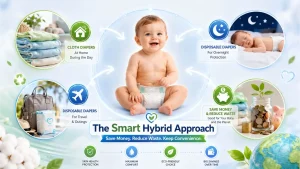
You do not have to choose just one option. In fact, many families combine both. Specifically, they use cloth at home during the day and switch to disposables overnight and for travel. As a result, this approach reduces total diaper costs by 40 to 60 per cent. Furthermore, it avoids the full laundry commitment of an all-cloth routine.
| Time / Situation | Recommended Diaper | Reason |
|---|---|---|
| Morning + Afternoon at Home | Cloth | Saves money, chemical-free |
| Evening Outing or Errands | Disposable | Convenient, no wet bag needed |
| Overnight Sleep | Overnight disposable | Maximum 10–12 hour absorbency |
| Daycare Days | Disposable | Most centres require disposables |
| Weekend Travel | Disposable | Easier without laundry access |
Additionally, children who wear cloth during the day tend to recognise the wet sensation sooner. Therefore, potty training can begin earlier. For timing signs, see. For the full diaper type overview and when each type belongs in your routine, return to ↑ How to Choose Diapers: The Complete Guide.
Full Pros and Cons Summary
Cloth wins on cost, environment, and chemical safety. Disposables win on convenience. Therefore, a hybrid routine — cloth at home, disposables out and overnight — gives most families the best of both worlds. For the complete diapering reference, return to ↑ How to Choose Diapers: The Complete Guide.
Frequently Asked Questions
In summary, the choice between cloth and disposable comes down to your priorities. Cloth saves money and reduces waste. Disposables save time. Therefore, a hybrid routine gives most families the best balance. No matter which option you choose, the most important factors remain the same — the right fit, the right size, and a consistent changing routine. For everything in one place, return to ↑ How to Choose Diapers: The Complete Guide.