How to Bathe Your Baby: The Complete Parent’s Guide
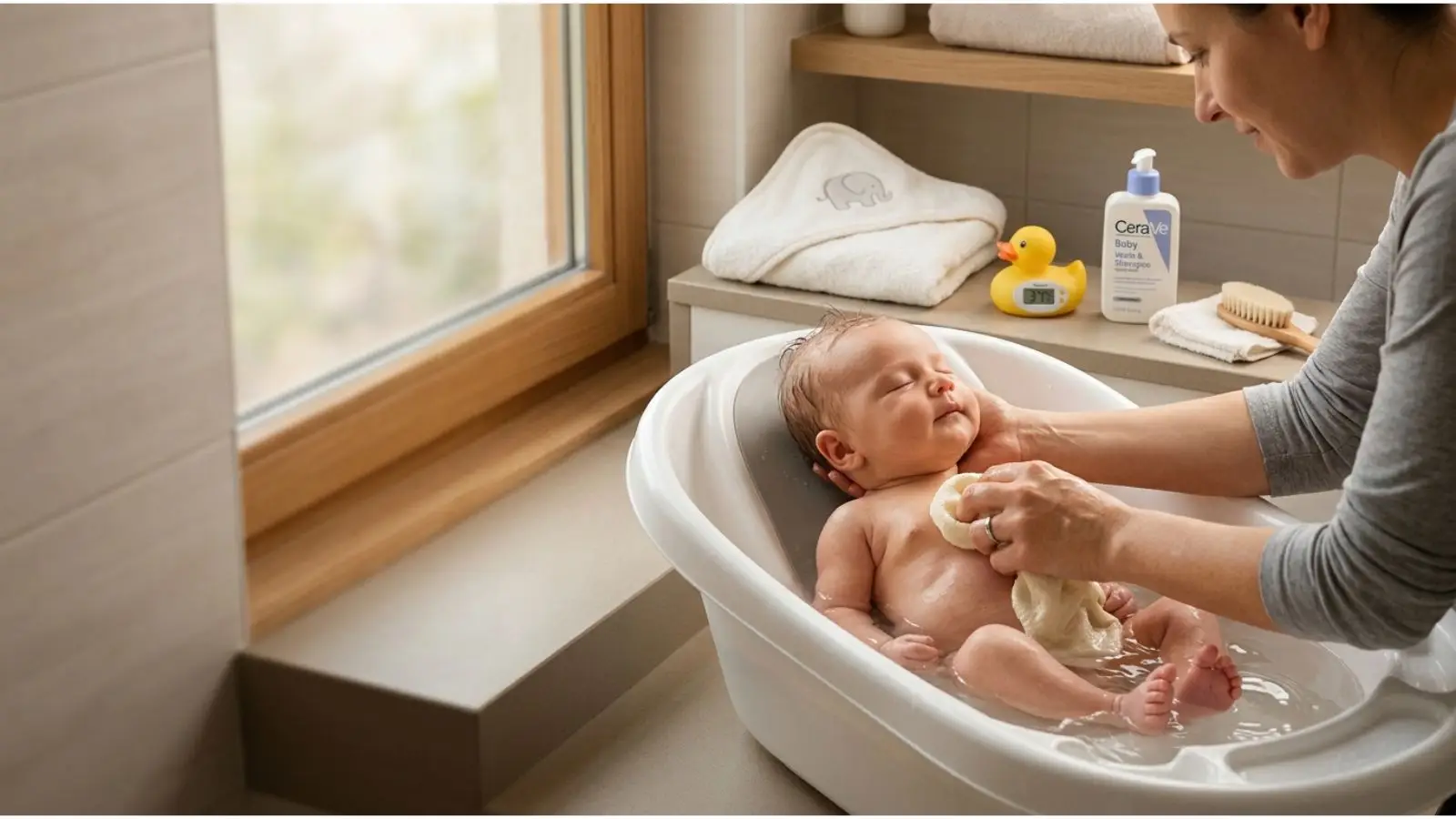
Learning how to bathe your baby safely protects their delicate skin and makes bath time stress-free. This complete guide covers timing, tools, water safety, and the right products for every stage.
How to Bathe Your Baby: The Complete Parent’s Guide
Learning how to bathe your baby safely is one of the first hands-on skills every new parent must master. A newborn’s skin is thin, sensitive, and easily irritated. Therefore, the water temperature, the products you use, and the technique you follow all matter far more than most parents realise. Bath time should be calm and enjoyable — not a source of anxiety. However, without the right preparation, it often becomes exactly that. This guide covers everything: when to start, how often to bathe, which tools to use, and how to keep your baby safe and comfortable at every stage. Additionally, this guide links to four specialist cluster articles for deeper knowledge on specific bathing topics.

Alt text: how to bathe your baby — calm newborn in a soft baby bath tub with warm water and gentle natural light, representing a safe and comfortable bath time
Did You Know? A newborn does not need a daily bath. In fact, bathing two to three times a week is sufficient for the first year, since over-bathing strips the skin’s natural protective oils and increases the risk of dryness and irritation.
How to Bathe Your Baby: Why Technique Matters More Than Products
Many parents focus entirely on choosing the right baby shampoo or the most stylish baby tub. However, technique matters far more than any product on the shelf. A baby bathed with the wrong water temperature, an unsafe grip, or the wrong order of steps is at far greater risk than a baby washed with a basic, unscented soap using the correct method. Therefore, this guide focuses heavily on the how, not just the what.
The four pillars of safe baby bathing are water temperature, physical support and grip, product selection, and bathroom environment safety. Each of these is covered in full detail below, and each links to a deeper specialist guide where relevant.
When to Give Your Baby Their First Bath
Hospitals and pediatricians increasingly recommend delaying the very first bath. The vernix — the waxy white coating on a newborn’s skin at birth — has natural antibacterial and moisturising properties. Consequently, most guidelines now suggest waiting at least 24 hours after birth, and ideally several days, before the first full bath.
Sponge Baths Before the Umbilical Cord Falls Off
Until the umbilical cord stump falls off — typically within 1 to 3 weeks — give sponge baths instead of full immersion baths. Use a soft, damp washcloth to clean the face, neck, hands, and diaper area without submerging the baby in water. This keeps the cord stump dry, which speeds healing and reduces infection risk.
Transitioning to Full Baths
Once the umbilical cord has fully detached and the area has healed, you can move to full immersion baths in a baby tub. For the complete guide on how to bathe a newborn safely during this transition period, see How to Bathe a Newborn Safely [INTERNAL LINK].
How Often Should You Bathe Your Baby
This is one of the most common questions new parents ask — and the answer surprises most of them. Newborns and young infants do not need daily baths. In fact, bathing too frequently can do more harm than good.
The Recommended Bathing Frequency by Age
For newborns up to 1 month: two to three times per week is sufficient. Daily face, neck, and diaper area cleaning is still necessary, but a full bath is not required more often than this.
For infants 1 to 6 months: two to three times per week remains appropriate for most babies, increasing to every other day once your baby begins eating solid foods and getting messier.
For babies over 6 months: daily bathing becomes more reasonable as babies begin crawling, eating solids, and getting genuinely dirty. However, even at this stage, daily bathing is a preference rather than a medical necessity.
For the complete breakdown of bathing frequency by skin type and season, see How Often You Should Bathe a Baby [INTERNAL LINK].
Essential Bathing Tools: What You Actually Need
The baby product market is full of unnecessary gadgets. However, only a handful of tools are genuinely essential for safe and effective bathing.
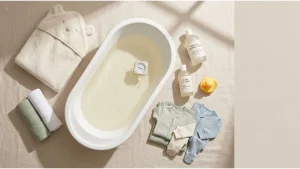
Alt text: how to bathe your baby — essential bathing tools laid out, including baby bath tub, soft washcloth, hooded towel, and gentle baby soap on a clean surface
Baby Bath Tub or Bath Seat
A dedicated baby bath tub provides a contained, controlled environment with a non-slip surface and proper support for a newborn’s head and neck. As your baby grows and can sit independently, a bath seat for the regular family tub becomes a practical option. Each has distinct advantages depending on your baby’s age and your bathroom setup. For the complete comparison between the two, see How to Choose Between a Bath Tub and Bath Seat
Soft Washcloths and a Hooded Towel
A few soft, lint-free washcloths are needed for gentle cleaning of the face and body. A hooded towel keeps your baby’s head warm immediately after the bath, when heat loss happens fastest. Babies lose body heat rapidly when wet, so having the towel ready before you lift your baby out of the water is essential.
A Reliable Bath Thermometer
A floating bath thermometer removes the guesswork from water temperature. The ideal range is 37 to 38 degrees Celsius — approximately the same as a healthy body temperature. Water that feels comfortably warm to an adult hand can be too hot for delicate baby skin, so a thermometer provides far more reliable confirmation than touch alone.
How to Choose the Right Baby Soap and Shampoo
Not every soap labelled “baby” is genuinely gentle. Reading the label correctly protects your baby’s skin from unnecessary irritation.
What to Look For on the Label
Choose products labelled fragrance-free or unscented, free from sulfates such as sodium lauryl sulfate, and pH-balanced for sensitive skin. Tear-free formulas reduce eye irritation during hair washing, which makes bath time considerably calmer for both baby and parent.
What to Avoid
Avoid products containing synthetic dyes, parabens, or heavy synthetic fragrances. These ingredients are common triggers for skin irritation and contact dermatitis in babies with sensitive skin. For the full comparison of the best baby soaps and shampoos by skin type, see How to Choose Baby Soap and Cleanser.
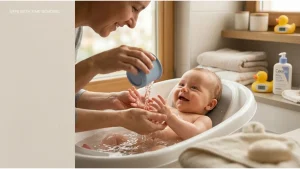
Alt text: how to bathe your baby with the right products — gentle fragrance-free baby soap and shampoo bottles arranged beside a soft baby washcloth
How to Bathe Your Baby: The Step-by-Step Safe Routine
Once you have the right tools and products ready, the actual bathing technique determines whether bath time is calm or chaotic.
Step 1 — Prepare Everything Before You Start
Gather the towel, clean clothes, diaper, and any products you need before placing your baby in the water. Never leave a baby unattended in water, even for a single second — not even to grab a forgotten towel. This single rule prevents the overwhelming majority of bath-time accidents.
Step 2 — Check the Water Temperature
Fill the tub with 2 to 3 inches of warm water, ideally tested with a bath thermometer at 37 to 38 degrees Celsius. If you do not have a thermometer, test the water on the inside of your wrist — it should feel warm, not hot.
Step 3 — Support the Head and Neck Continuously
For newborns, one hand should support the head and neck at all times throughout the bath. Use your other hand to wash. As your baby grows and gains head control, this support requirement gradually reduces, but constant supervision remains essential regardless of age.
Step 4 — Wash from Cleanest to Dirtiest Areas
Start with the face using plain water and a soft cloth, avoiding the eyes. Move to the body next, and finish with the diaper area last. This order prevents spreading bacteria from the diaper area to other parts of the body.
Step 5 — Lift Out and Dry Immediately
Wrap your baby in the hooded towel the moment they leave the water. Heat loss happens extremely quickly when skin is wet, so drying promptly prevents your baby from becoming cold and uncomfortable.
For the complete bathroom safety checklist that should accompany every bath, see How to Keep Bath Time Safe [INTERNAL LINK].
How to Bathe Your Baby Safely: The Bathroom Environment
Bathroom safety extends well beyond the few minutes your baby spends in the water. The surrounding environment matters just as much.
Non-Slip Surfaces
Use a non-slip mat both inside the tub and on the bathroom floor. Wet surfaces combined with a slippery baby create one of the most common causes of bathroom injuries for both parent and child.
Water Heater Settings
Set your home water heater to a maximum of 49 degrees Celsius. This single adjustment prevents accidental scalding if a tap is left running or a sibling adjusts the water temperature unexpectedly.
Keep Everything Within Arm’s Reach
Position all towels, products, and clean clothes within arm’s reach before starting the bath. Reaching away from your baby — even briefly — to grab a forgotten item is one of the leading causes of preventable bath-time accidents.
Common Bathing Mistakes and How to Avoid Them
Mistake 1 — Bathing Too Frequently
Daily bathing for young infants strips natural skin oils and increases dryness. Therefore, stick to two to three baths per week unless your baby is significantly messy from solid foods.
Mistake 2 — Using Adult Soap or Shampoo
Adult products are formulated for thicker, more resilient skin. They are frequently too harsh and drying for a baby’s delicate skin barrier, leading to irritation and dryness.
Mistake 3 — Leaving the Bathroom Even Briefly
Never leave a baby alone in the bath, even to answer the door or grab a towel. If you must leave, wrap your baby in a towel and take them with you.
Mistake 4 — Ignoring Water Temperature
Always test the water before placing your baby in it. A few seconds with a thermometer prevents both burns from water that is too hot and discomfort from water that is too cold.
Pros and Cons of Different Bathing Approaches
The Good:
A consistent bath routine becomes part of a calming bedtime ritual.
Regular gentle cleaning prevents skin issues like cradle cap and irritation.
Bath time offers valuable bonding and sensory development time.
The right tools make bathing significantly faster and less stressful.
The Bad:
Over-bathing can dry out sensitive skin if done too frequently.
Newborns require constant, undivided attention throughout the entire bath.
The wrong water temperature can cause discomfort or, in rare cases, injury.
Some babies cry or resist bathing initially, requiring patience and gradual adjustment.
How to Bathe Your Baby: Frequently Asked Questions
What is the ideal water temperature for a baby bath?
The ideal temperature is 37 to 38 degrees Celsius, roughly equivalent to a healthy body temperature. Always test with a thermometer or the inside of your wrist before placing your baby in the water.
How long should a baby bath last?
Five to ten minutes is sufficient for most babies, especially newborns. Longer baths increase the risk of the water cooling below a comfortable temperature and offer no additional cleaning benefit.
Is it normal for my baby to cry during bath time?
Yes, very common, especially in the first few weeks. The sensation of water and undressing can feel unfamiliar. Consistency, a warm room temperature, and a calm voice usually help babies adjust within a few weeks.
Can I bathe my baby every day once they start crawling?
Yes. Once babies become more mobile and start eating solid foods, daily bathing becomes more reasonable due to genuine mess. However, it remains a preference rather than a medical requirement at any age.
How to Bathe Your Baby: Explore the Full Bathing Guide Series
This pillar covers the fundamentals. For specialist depth on every bathing topic, explore these four detailed guides.
Final Thoughts
Knowing how to bathe your baby safely becomes second nature within a few weeks of consistent practice. Focus on the fundamentals: correct water temperature, continuous support, gentle gender-neutral products, and a calm, prepared environment. Beyond that, every family develops its own bath-time rhythm that works for their baby’s temperament and schedule.
“A calm bath time is built on preparation, not perfection.”