When to stop using diapers

Learn exactly when to stop using diapers based on real readiness signs — not age. This guide covers daytime, naptime, and nighttime transitions with a clear step-by-step plan.
When to Stop Using Diapers: Reading Your Child’s True Readiness Signs
Knowing when to stop using diapers is just as important as knowing when to start potty training — and the two are not the same decision. Many parents remove diapers too early, leading to accidents, regression, and significant stress for both parent and child. Others wait too long and miss the window of natural readiness. Therefore, understanding when to stop using diapers based on real developmental signs — rather than age guidelines alone — makes the transition faster and far less stressful. This guide covers the specific daytime, naptime, and nighttime signs that confirm your child is truly ready. Additionally, for the complete diapering journey from newborn to this final transition, read our complete reference ↑ How to Choose Diapers: The Complete Guide [PILLAR LINK].

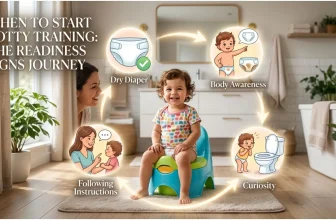
Alt text: when to stop using diapers — happy toddler in underwear standing confidently next to a small potty chair representing the milestone of completing toilet training
When to Stop Using Diapers During the Day: Daytime Readiness Signs
Daytime readiness comes first and is typically the easiest stage to identify. However, do not remove the daytime diaper until all three of the following signs are present consistently — not just occasionally.
Sign 1 — Consistent Daytime Dryness for 2 or More Hours
Your child’s diaper stays dry for two or more consecutive hours during active daytime play. This shows that the bladder has developed enough voluntary muscle control to hold urine between trips to the toilet. Without this physical development, even the most motivated child will have frequent accidents.
Sign 2 — Announcing the Need to Use the Toilet in Advance
Your child tells you they need to use the toilet before the event occurs — not after. This is the single strongest indicator of daytime readiness. It shows that your child can feel the urge, connect it to the required action, and communicate it in time to act. Consequently, this sign alone is often enough to confirm daytime readiness.
Sign 3 — Consistent Potty Success Over Two Weeks
Your child uses the potty or toilet successfully at least 75 percent of the time over a continuous two-week period. Occasional success does not indicate readiness. Consistency over time does. Therefore, keep a simple tally for two weeks before removing the daytime diaper permanently.
For the full step-by-step potty training plan that precedes this transition, see When and How to Start Potty Training [INTERNAL LINK C09].

Alt text: when to stop using diapers daytime signs — three-panel infographic showing dry periods, advance toilet announcements, and consistent potty success rate as readiness indicators
When to Stop Using Diapers at Night: Different Signs Apply
Nighttime readiness comes significantly later than daytime readiness for most children. In fact, many children who are fully daytime trained continue to need a nighttime diaper for 6 to 18 additional months. This is completely normal and reflects the separate development of deep-sleep bladder control — a physiological process that cannot be rushed by training.
Sign 1 — Waking Up Dry Most Mornings
Your child’s nighttime diaper is dry — or only very lightly damp — when you check it in the morning. This pattern should be consistent for at least 7 to 10 consecutive mornings before you remove the nighttime diaper. One or two dry mornings a week are not sufficient.
Sign 2 — Asking to Use the Toilet During the Night
Your child wakes spontaneously during the night and asks to use the toilet. This shows that the bladder signal is strong enough to interrupt sleep — a key milestone in nighttime bladder development. As a result, this sign often appears shortly before consistent morning dryness begins.
Sign 3 — Telling You the Nighttime Diaper Is Dry
Your child proactively tells you their diaper is dry when you go in to check in the morning. This level of body awareness, combined with consistent dry diapers, is the clearest possible confirmation that nighttime readiness has arrived.
For the complete bedtime system that protects skin during the transition period before nighttime readiness arrives, see Nighttime Diapering Routine for Better Sleep [INTERNAL LINK C14].
For the complete diapering reference covering all diaper types and brands, return to ↑ How to Choose Diapers: The Complete Guide [PILLAR LINK].
The Gradual Transition Plan: From Diapers to Full Independence
The transition away from diapers works best when it is done in three distinct phases — not all at once. Removing all diapers simultaneously overwhelms most children and leads to accidents and regression. Instead, follow this phased approach.
Phase 1 — Remove the Daytime Diaper First
Once all three daytime readiness signs are consistently present, switch to cotton training underwear during all waking hours. Keep the naptime and nighttime diaper in place. Do not switch both simultaneously. As a result, your child builds confidence with daytime independence before tackling the more difficult sleep periods.
Accidents will happen during Phase 1. This is expected and normal. Clean up calmly and without comment. Praise every successful toilet trip. Additionally, carry a spare outfit whenever you leave the house for the first four to six weeks.
Phase 2 — Remove the Nap Diaper After 2 to 4 Weeks
Once daytime accidents are rare and your child consistently uses the toilet before and after naps, remove the naptime diaper. Place a waterproof mattress protector under the sheet. If wet naps occur more than twice a week, return to a nap diaper for another two weeks before trying again. There is no penalty for taking this phase slowly.
Phase 3 — Remove the Nighttime Diaper Last
Only remove the nighttime diaper once your child has been waking up dry consistently for at least 7 to 10 consecutive mornings. Place a waterproof mattress protector under the sheet. Have your child use the toilet immediately before bed every night. Additionally, limit large fluid intake in the hour before bedtime to reduce nighttime bladder pressure.
If wet nights occur more than twice a week after removing the nighttime diaper, this is a sign that physiological nighttime readiness has not yet arrived. Return to a nighttime diaper without any negative framing. This is a biological development timeline — not a behaviour issue.
What to Do When Your Child Regresses After Stopping Diapers
Regression — returning to accidents after a period of consistent success — is completely normal and does not indicate a problem with your child or your parenting approach.
Common Regression Triggers After Stopping Diapers
The most common triggers for regression include: a new sibling arriving, moving house, starting a new childcare setting, illness, or any significant change in routine. Each of these events shifts your child’s attention and emotional resources away from toilet awareness. As a result, temporary regression follows.
How to Respond to Accidents Without Creating Anxiety
Respond to every accident with complete calm. Clean it up matter-of-factly without expressing frustration, disappointment, or urgency. Avoid phrases like “you know better” or “we don’t do that anymore.” Instead, simply say “That’s okay. Let’s try the toilet next time.” Furthermore, if regression persists for more than two weeks, temporarily reintroduce pull-up training pants during outings — without framing it as going back to diapers. For the best pull-up options during the transition period, see Best Pull-Up Pants for Toddlers [INTERNAL LINK C05].
When to Stop Using Diapers: Frequently Asked Questions
At what age should most children stop using diapers?
Most children complete daytime diaper removal between 2.5 and 3.5 years of age. Nighttime diaper removal typically happens between 3.5 and 5 years. However, both timelines have wide normal ranges. Focus entirely on the readiness signs described in this guide rather than on the age.
Is it normal to stop using diapers later than other children?
Yes, completely normal. Every child’s bladder development follows its own timeline. Boys typically take longer than girls on average. Additionally, premature babies often reach these milestones later than their calendar age suggests. There is no developmental benefit to rushing the process before genuine readiness is present.
Should I wake my child at night to use the toilet after removing the nighttime diaper?
This strategy — called lifting or dream weeing — is sometimes suggested but has limited evidence of long-term effectiveness. It can disrupt sleep for both parent and child. Therefore, most paediatric sleep experts recommend against it. Instead, wait until your child’s natural nighttime bladder development catches up on its own timeline.
My child refuses to stop wearing diapers. What should I do?
Some children develop an emotional attachment to diapers, especially if a new sibling has recently arrived or there has been a significant life change. In this case, reduce any pressure around the transition entirely. Return to using a pull-up without comment. Additionally, give the process two to four more weeks before trying again in a calm, child-led way. Pushing against resistance always extends the process.
For the complete parent reference covering all diaper types, brands, skin types, and sizing, return to ↑ How to Choose Diapers: The Complete Guide [PILLAR LINK].